Nobody Is Coming to Save You | Solve the Problem

In law enforcement, we were taught that incapacitating head shots are an option in a hostage situation, but only when you are close enough and confident enough to take that extremely narrow shot. For most of my career, we carried Sig Sauer .357 semi-automatic pistols with a hammer you could cock for single-action. Moving from the long, heavy double-action first pull to single-action gave a light, short trigger press. That was a good option if the hostage taker and hostage were standing still.

Once the unjust aggressor and the intended victim (citizen or officer) are entangled, grappling, moving, or being moved, the situation changes. At that point, a precise shot is usually no longer a good option. Someone has to close distance and get their hands dirty. A violent separation can involve tackling, shoving, or jerking away with momentum.  Even a temporary separation can create the space the legitimate defender needs to deliver incapacitating shots and stop their continuing imminent deadly threat.

The two parties may also separate on their own through pushing, pulling, or maneuvering. When that gap opens, a composed officer or citizen protector can exploit it with one or two well-placed shots. This is not, and cannot be, a mag-dump solution born of panic. Composure under those conditions is usually earned through enough “wild and woolly” experience to see opportunities as the violence develops. If you lack the experience to have and maintain composure, the only other reliable hedge, in my opinion, is to over-develop pure shooting skill so that even a high-volume response remains exceptionally accurate.  

Know your adversary and know yourself. Deliberately strengthen the areas where you are weak rather than continuing to polish only the skills that already make you feel competent. Do the hard work necessary to expand your capabilities so those skills run in the background under stress.

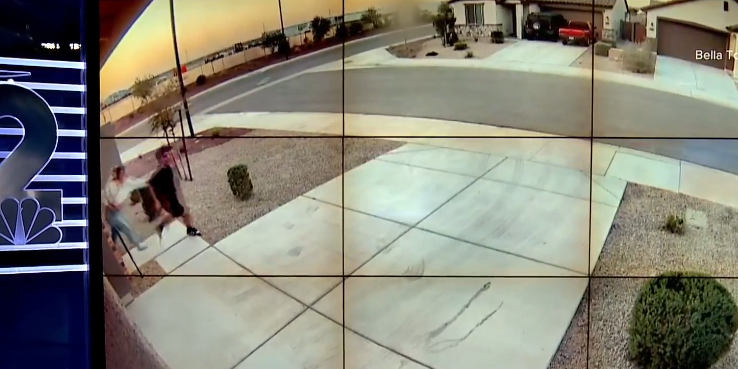
Videos show officers making rear, very close, or contact shots to stop the threat. In today’s confused legal environment, especially in dense population centers, you will want as much of the encounter as possible captured on CCTV or doorbell cameras. You don’t get to pick the time and place where ol’ boy breaks bad, so realize these kinds of solutions carry higher risks on the legal battlefield.  This isn’t legal advice; I’m not an attorney; I’m simply sharing how I looked at this kind of problem during my career and still do today.

The best solution for almost all of these problems is still early recognition. See what is developing, get ahead of it, and dominate inside the moral, legal, and physical windows of opportunity before the parties become entangled. Once they are locked together, the required solution carries far higher physical risk and will look ugly to anyone who does not understand real violent encounters.

I Can’t See the Heart – But I Can See the Hands

One thing I learned during my law enforcement career is that bad guys are liars and manipulators. They will say whatever they need to say and act however they need to act to put themselves in a position of advantage – a position from which they can escape, which was the most common course of action I encountered, or a position from which they can attack you if that’s their intent. They stall, they distract, they negotiate, and they wait, sometimes patiently, for an opportunity to exploit a vulnerability.

Over time, I learned to pay far less attention to what someone was saying and far more attention to what they were doing. For a human being, talk is cheap. Actions really do speak louder than words.

After a tragic event like the one in the video above, mainstream news outlets will often bring on a mental-health professional to discuss whether better treatment, closer monitoring, or earlier screening might have prevented the attack. Another dimension of reality that mainstream media rarely, if ever, discusses is spiritual reality. In a general sense, it shouldn’t surprise us that many contemporary psychological and psychiatric professionals do not give substantial weight to spiritual explanations. In my opinion, that can lead us to neglect the more important questions about the soul, morality, evil, and human nature.

But here is the practical point: if I’m visiting New York City and someone pulls a knife and begins attacking people, does it matter to me in that moment whether the person has a diagnosed mental illness, an undiagnosed mental illness, a substance-induced condition, some spiritual affliction, or no identifiable condition at all?

No, not when the question is whether I am facing an imminent deadly threat.

I cannot know what motivated the attack, or what is ultimately happening in that person’s heart. Those things are hidden from me. What I can observe is conduct.

What is the person doing? How close are they? What is their posture? Where are they moving? Are they advancing? Are they armed? Are they attacking someone? Have they demonstrated the ability and apparent intent to cause death or serious bodily harm? Is the threat imminent?

Those are the questions that matter when seconds count.

And there is an important distinction here. Recognizing that someone may have a mental illness does not make the person less dangerous. In my experience, it may make them more dangerous because that person may be far more experienced at doing the least expected things.  Odd things.  Awkward things that reset my OODA loop to observe and orient as I ask myself, what am I seeing here?  When an individual is actually committing an imminent violent attack, the existence or absence of a psychiatric diagnosis does not erase the immediate danger created by his or her conduct.

The same is true of the spiritual questions.

What if someone has immersed himself in the occult? What if their problem is that of diabolic oppression, obsession, or possession? What if there is no mental illness whatsoever and the simplest explanation is that the person has chosen to do something wicked?

I cannot know the answer to those questions in the middle of a deadly-force encounter.

And that is precisely the point.

I don’t need to know everything or anything, for that matter, about a person’s heart before recognizing what his hands are doing.

I don’t need to understand every cause before responding to an imminent threat. We ought to be soft-hearted but not soft-headed. False compassion is a curse and pox upon the land in the same way that political correctness is a curse and a pox upon the land. If you haven’t ever seen Archbishop Fulton Sheen’s talk on false compassion, it is pure gold:

And I don’t need to determine whether someone has a mental illness, is spiritually afflicted, morally corrupt, or some combination of those things before recognizing an imminent deadly threat.

Those questions may matter enormously afterward, to investigators, physicians, courts, families, clergy, and ultimately to God. But they are not mine to answer in the fraction of a second in which someone is trying to kill me or someone I’m responsible for, like my wife and children.

Christianity teaches that God alone ultimately knows the heart. “…man looks on the outward appearance, but the LORD looks on the heart.” (1 Samuel 16:7)

That should produce humility, not passivity.

I can refuse to presume to know another person’s soul while still taking their actions seriously. I can have compassion for human brokenness without confusing compassion with surrendering an innocent person’s life to an unjust aggressor. I can pray for the person who is attacking and still recognize that the attack must be stopped.

Because when an unjust aggressor initiates an imminent deadly threat, my responsibility is not to diagnose the soul of the aggressor.

My responsibility is to protect innocent life.

God judges the heart.

I have to deal with the hands.

Shot Ain’t Dead | Dead Is Dead

Watch the officer in the video. He is ambushed, shot multiple times at close range, and still has to fight. Several seconds pass before he can get his firearm into the fight, establish a shooting platform, confirm his sights, and stop the threat. That is the reality of a sudden deadly-force ambush: you start behind, wounded, surprised, and scrambling for any chance to win.

One reliable way to build the ability to keep fighting when everything in you wants to quit is to practice not quitting on smaller hard things every day. As a Catholic, I know I am supposed to pick up my Cross daily. Life already offers plenty of opportunities to do hard, uncomfortable, virtuous things. If we spend our ordinary days chasing comfort and ease, we should not be surprised when we fold the moment the stakes become life-and-death.

If you are being shot or stabbed repeatedly, something has already gone terribly wrong. Once the initial shock passes and you regain even a little composure, your only job is to stop the person trying to murder you. Fear of death, the pain of the wounds, the blood loss: all of that has to be locked in a box and dealt with later. In those few seconds, focus only on the next action that moves you closer to ending the threat.

Hits to the central nervous system (“switches”) can end the fight instantly; either you die on the spot, or you lose the use of limbs. Hits to the heart, major vessels, or liver (“timers”) usually leave you with seconds, not minutes. You will rarely know which one you just took. What you can know is that the aggressor will keep trying to kill you. Expect no mercy. As long as you still have breath and any strength left, your sole focus is winning the fight.

That is a winning mindset. Winning must come before thoughts of survival. A pure survival mindset has its place, after you stop the threat. Inside the fight itself, treating the encounter like a competition or a fair fight is a loser’s mindset. Professionals do not look for fair fights. They stack the odds with surprise, speed, and violence of action. King David understood this. He refused to play Goliath’s game on Goliath’s terms. He remembered how he had already defeated lions and bears, then used the tools and tactics that gave him the advantage. He did not care what onlookers thought. He humbled himself, identified what it would take to win, and did that.

Deadly-force encounters are not combat sports. Sport techniques and the competitive mindset that goes with them will not save you here.

God forbid you or I ever face this. But if we do, decide now: do not quit. Resolve to keep working the problem until you stop the unjust, imminent, deadly threat.  If time gives way to eternity, you’ll know because you’ll be kneeling before the just Judge, the Lord of all lords, and the King of all kings.  

A New Analogy

Whether a stranger is approaching me or I am approaching a stranger, my priority is to recognize danger early, avoid it when I can, and, if avoidance is no longer possible, improve my position as much as circumstances reasonably allow. Is that a guarantee? No. There are no guarantees. Dealing with unjust criminal aggressors is like handling poisonous snakes. Even if you don’t become complacent or distracted, eventually the encounter can still end badly. The best bet is, as the Bible says, to avoid such men. Police can’t do that. For the rest of us, St. Paul talks about the characteristics of men we ought to avoid in 2 Timothy 3:1-5.

The late Col. John Boyd talked about doing the least expected things rather than what we might perceive as the most effective thing. The reason, at least in part, has to do with resetting their OODA Loop (i.e., their plan: Observe, Orient, Decide, Act). When an unjust criminal aggressor observes you, and whatever it is you happen to be doing, it’s a good thing if they’re asking themselves in their mind: What am I seeing? Confusion for most people causes hesitation. Causing hesitation means you’re taking time back; you’re adding milliseconds, perhaps seconds, which you can exploit to your advantage to either avoid dangerous men or, when it’s too late for that, maneuver to a better position, dominate, and win.

Watching unjust game film (i.e., the current techniques and tactics that bad guys consistently use) helps you build a better orientation. Boyd believed that orientation was the most critical part of OODA. The way I think of orientation includes things like your correct or incorrect understanding of reality (i.e., how unjust violent scenarios actually develop). Orientation includes building a trained response and repeating it until that response becomes unconscious competence requiring near-zero mental bandwidth. There is a lot more to orientation.

To dominate and win means that, to the bad guy’s eye, it appears you transitioned from observe to act, skipping the orient & decide stages. Meanwhile, he’s slowing down, and you’re speeding up. He gets reset from act back to observe, and he’s confused by the odd, awkward, chaotic behavior he’s seeing and experiencing. This is learning how to reset ol’ boys’ OODA loop. Time is the most precious commodity you either have or lack in a lethal confrontation, and transitions (i.e., fast transitions) can overwhelm your adversary.

When I was young, I remember law enforcement trainers saying, “You’ve got to ‘get inside’ his OODA loop.“ I remember thinking how cool that sounded. Yes! That’s what I’m going to do! But sadly, nobody ever explained what that meant. To ‘get inside’ your adversary’s OODA loop means to interrupt his plan (i.e., his game) by resetting it to the observe phase. Doing a least expected thing is likely to leave him momentarily confused and hesitant. We don’t want to play his game. When a violent confrontation is unavoidable, we want to apply our own unique response that he’s not expecting (i.e., think how David defeated Goliath).

Recently, an analogy came to me: a modern high-speed roller coaster.

That long climb toward the apex, with the unmistakable click-clack of anticipation, is the buildup to a violent confrontation. The coaster keeps climbing, and the tension keeps building. Then it reaches the apex. From that point forward, the ride changes dramatically. The initiative has been seized by someone, depending upon who recognized the moment, acted first, and how.

The winning response looks a lot like what happens next on a modern roller coaster: a rapid acceleration and succession of turns left, then right, then a roll. Those rapid changes are transitions. For any Jiu Jitsu practitioner, think about how you might apply that the next time you roll in a match. Every time I watch one of Mike Tyson’s early fights, I can see his odd, awkward, unexpected way of advancing to the inside position, dominating, and overwhelming his opponent.

A modern roller coaster doesn’t stop once it leaves the station. It advances until the task is complete. Once the initiative is seized, techniques and tactics (i.e., tactics are techniques strung together) and their quick transitions accelerate through a succession of twists, turns, drops, rolls, and reversals until the ride finally ends. The fighter (i.e., coaster) returns to the station.

That’s how I think about transitions in a violent confrontation. You don’t want to become predictable or static. You want to remain adaptable and continue making rapid, appropriate transitions as the circumstances change. With each transition, your adversary falls further behind, not because he has forgotten what just happened, but because things are changing faster than he can process. The result is a widening gap between his ability to observe and orient and your ability to continue adapting and acting. His OODA Loop is repeatedly reset. That is to get inside, dominate, and destroy his OODA loop.

And the ride keeps moving.

These principles apply to business as well. Apple gives us an example in 2007, when it launched a multi-touch device with no physical keyboard (i.e., departing from BlackBerry), not trying to make a better BlackBerry or Nokia, but playing its own game with the original iPhone (i.e., first generation). Apple was advancing and taking ground in unexpected ways. The principles for winning or losing are universal.

The bottom line is this: If I cannot stack the odds decisively in my favor because of the terrain or circumstances, then I’m looking to manipulate time, distance, shielding, and positioning to negate his built-in advantages. I’m not looking for a fair fight; I’m looking to change an unfavorable equation. If he’s sitting at 90/10 because circumstances favor him, my minimum objective is to move that equation to at least 50/50. That’s still not where I want to be, but 50/50 is better than 90/10 in his favor. From there, every legitimate advantage I can create matters.

Marketplace & Public Meeting Locations

In this blog post, I’ll share how you might help a family member or friend who has concerns about whether a Marketplace exchange location is in a relatively safe area.  A client, let’s call her Rebecca, reached out for help as she and her husband were scheduled to pick up a puppy. The time and location had already been set near Michigan City, and her concern was whether the area was safe.  I inquired what time the exchange was supposed to occur and learned it was in the afternoon.  I explained that when I know I have to go into a dangerous area with higher crime, I try to do so in the daylight morning hours and do my best to leave such an area by noon or shortly after noon.  The last thing I want to do is be in a higher-crime, dangerous area from sunset to sunrise.  

One of my favorite internet tools for identifying dangerous high-crime areas is crimegrade.org.  CrimeGrade has tabs for overall crime, property crimes, and violent crimes. Clicking on the “more” tab provides numerous categories of crimes, such as murder, robbery, and drug crimes.  Rebecca had agreed to meet the sellers and purchase the puppy at a gas station just south of Michigan City, as seen below.

The buyer, Rebecca, and her husband were traveling to make this exchange happen, so it needed to happen in this area.  As you can see in the illustration above, there is a dangerous area just north of the gas station.  Dangerous areas are dangerous because of dangerous people who live in and move around those dangerous areas.  So, it’s not unreasonable to believe some dangerous men will drive to the gas station for gasoline.  Also, some dangerous men will have to walk to gas stations to purchase things like cigarettes, food items, blunts (cigars) to pack their cannabis into, drinks (including alcohol), and any other items commonly sold at a gas station.  Gas stations in or near higher crime dangerous areas are often magnets for crimes like robberies and carjackings.  The dark green area indicates a low crime rate in this case.  I used Google Earth with the street view to do a drive-by to check the terrain and see if there were better options for Rebecca, her husband, and the family selling the puppy. 

The image on the top left (Google Earth) shows the original meeting location. We see a motorcycle dealership in the top right image, just north of the gas station. In the bottom left image, north of the stop light on the opposite side of US 421, we see a large car dealership. In the bottom right image, which is north of the large car dealership, we find a tractor and lawn-type business.  

If you were to do an internet search for robberies at car dealerships, you’d find a long list of after-hours burglaries and car thefts.  

I reminded Rebecca that people are the problem. Today, many young men are making it easier to identify potential threats, as they have capitalized on the COVID mask-wearing phenomenon long after the initial fears of COVID have subsided.  Wearing a COVID mask with a hood up conceals one’s identity.  I told Rebecca I’d probably change the meeting place to the car lot.  Salesmen looking to sell inventory to prospective buyers will watch car lots better, which means at some point, you might have to deal with a car salesman briefly. Still, men concealing their identities are less likely to walk onto or loiter on the car lot.  The probability of me having a problem even at the gas station is relatively low because it’s not a high-crime area. However, it is close to a high-crime area.  Moving the meeting place to a car dealership further lowers the probability.

I made it clear to Rebecca that if she needed anything else, she should give me a call.  I followed up with her later to see how it went.  Rebecca advised that she and her husband parked far out in the car lot, and the exchange went perfectly, with no sketchy people coming anywhere near them.  

While writing this, I revisited the area via Google Earth. I did a larger street view driveby going into the higher-crime, more dangerous area to the north to see if there were any clues as to why the original gas station was labeled dark green, which indicates it’s a relatively safe location.  The first stop light north of the Interstate 80 exit had a gas station on three of the four corners.  

Typically, people are lazy.  Bad guys, ambush predators, and unjust criminal aggressors are no exception to this general laziness rule.   This goes a long way to explaining how this gas station south of Interstate 80 could have such a safe rating.  

Several months ago, my wife and I attempted to help a good friend with a Marketplace purchase. Still, the experience was so bad we decided not to purchase anything using Marketplace. That’s a story for another blog post.