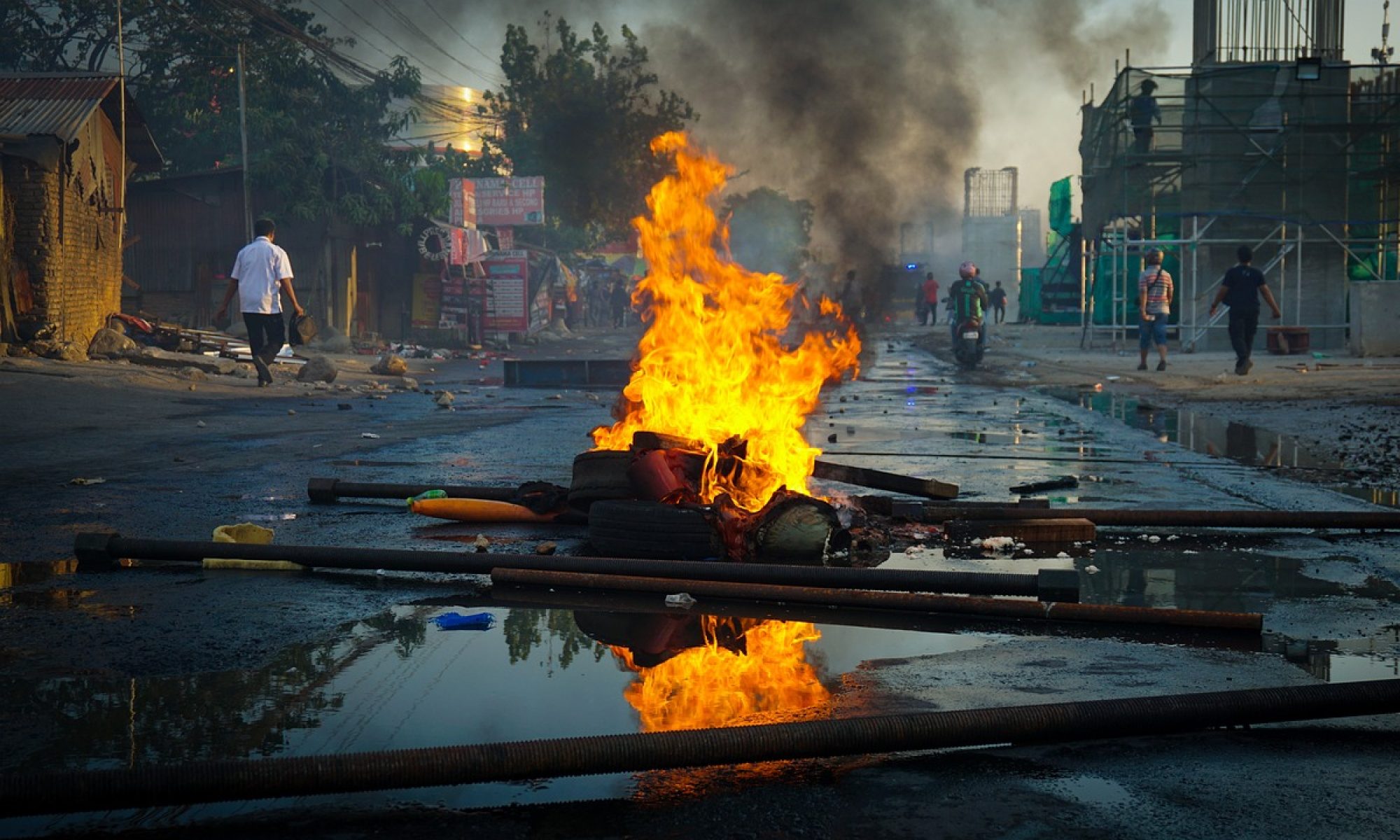
Humilitas First recommends four rules to reduce your chances of facing a deadly force confrontation. Here are a few reasons we find ourselves breaking one or more of these rules:
Family Commitments
Unique Shopping Opportunities
Work or Business Related
Strive to avoid breaking all four rules at the same time.
Rule #1 Avoid High Crime Dangerous Areas
The gold standard for identifying a high crime dangerous geographical area is illegal shots fired. Good luck finding a city willing to plot these locations on a map. If your city uses a service like ShotSpotter, you could submit a FOIA request to identify where city fathers have deployed the acoustic sensors. For every gun-related homicide, there are multiple times more shootings involving a gunshot wound where the person survives. For every shooting involving a gunshot wound, there are numerous times more illegal shots fired. Look at the shooting map above from Peoria, Illinois, from 2017 to see how the shooting victims plotted on a map provides us with a fairly well-defined geographical area to avoid. This well-defined area would fill in and grow if the illegal shots fired were added to this map.
These violent crimes do not occur in a vacuum. The geographical areas where you have unjustified shootings and murders include all other violent crimes—robbery, vehicular hijacking, vehicular invasion, aggravated battery, aggravated assault, and kidnapping. When my children were old enough to drive, they used one of our two vehicles. My police career was in Springfield, Illinois, population 113,394 (2021). The first thing I did was print off a map of Springfield and geographically define for my children where my vehicle is not permitted to go. Thereby limiting where my children were allowed to go.
To understand what geographical areas should be avoided, befriend a police officer and ask him or seek out the data showing where most violent crime occurs. If you cannot find a shooting map that plots out where the shootings and murders are happening, then I’ll give you a couple of other useful tools that I trust.
Crimegrade.org offers mapping with tabs for violent crime overall, and then, under more, you’ll find additional tabs for individual crimes like murder, robbery, assault, and drug crimes, to name a few.
City-data.com provides a more intensive research capability as you can look at how many murders, robberies, rapes, assaults, etc, have occurred in a particular city over a several-year period.
Rule #2 Avoid Dangerous Men
I’ve heard firearms instructors ask the question: Can you look at a person and tell whether they’re a potentially dangerous man? Then, they’ll let you know that you cannot tell whether a person is potentially hazardous by their appearance. They are wrong. This is about probabilities. Some would then use the Ted Bundy argument. Ted Bundy could dress and comport himself to appear helpless, injured, and in need of assistance or polite and helpful. Ted Bundy was an outlier. Even with an outlier like Ted Bundy, some principles can assist you and your family in avoiding such extreme murderous traps.
With an outlier like Ted Bundy, you have to understand proxemics. Proximity is king when it comes to identifying a potential threat. Here are three leadership rules I frequently ask myself during my law enforcement career.
Where am I leading my people (or where am I being led by others)?
Can I, should I?
Why now?
Where was Ted Bundy leading his victims? What emotions did he tap into to move his victims towards his murderous traps? Ask yourself where your feelings are leading you. If you’re being led to an isolated, lonely place of vulnerability, then yes, you can, but no, you should not! Proximity is king.
If a man dresses like an outlaw-type motorcycle gang member or an inner-city gang member, they are making a statement to the world, and that statement is: I’m a dangerous man! Why wouldn’t you believe him? Some would argue that a particular person is just playing dress up as a want-to-be. My response is in the form of a question: What do they want to be? In other words, what vices does a particular person value highly? What do they want to be? The difference between a want-to-be and someone who is what they purport to be through things like dress, adornment (prison & gang tattoos), and comportment is time and opportunity. If they want to become something long enough, an opportunity will eventually present itself, and they’ll become what they want to be. Do you want to be their opportunity? I don’t. So I’ll box around or avoid those kinds of men. If you believe that a Christmas toy drive for children means outlaw biker groups are a bastion of virtue, then you are exceedingly naive. If you buy into the political correctness of not saying anything negative about inner-city street gangs, then you are not dealing with personal safety from the perspective of reality. You are entertaining fantasy, myth, and grave errors.
A man’s disposition or mood is another aspect of identifying a potentially dangerous man. If I hear a man screaming profanities into his phone as he walks down the street, I will simply move offline so I don’t have a ‘meet and greet’ with that man. If I hear a loud argument in a high-crime, dangerous area, I wouldn’t be surprised if the next thing I hear is shots fired. Of course, not every argument in a high-crime area leads to such an event, but the point is that it wouldn’t surprise me. Say I was visiting my sister-in-law, who lives in a high-crime, geographically dangerous area, and outside, I heard angry, profane screaming begin. While most folks would want to look out the window to see what’s happening, I’d rather move our conversation downstairs to her basement. Why? The same reason as an officer, when we had a standoff with an armed barricaded subject, we’d tell the neighbors if they didn’t want to evacuate for the afternoon, our recommendation was they shelter in place in their basement. Fox holes stop bullets. Here are some other dispositions to avoid:
Lawless Spirits
Party Spirits
Spirit of Madness
Rule #3 Avoid Dangerous Periods
Avoid going to high-crime, dangerous areas and around dangerous men from sunset to sunrise. Summertime or warm weather is another period to avoid entering high-crime, dangerous places. If I had to go to such an area, I’d prefer to do so during the early daylight morning hours up until about noon. Pay attention to times when shootings are being reported in your geographical area or those areas nearby that you frequent.
Rule #4 Don’t Loiter or Hang Out in Areas of High Vulnerability
With good planning, you can reduce the number of tasks needed in a dangerous geographical area with high crime rates. Learn to be more efficient when arriving and departing in a high-crime, dangerous area. Humilitas First has a YouTube channel dedicated to educating innocent people of goodwill on this subject matter. It is at https://www.youtube.com/@humilitasfirst/videos.
Unjust criminal aggressors hunt for and exploit opportunities to make you their next crime victim. They exploit vulnerabilities. If I need to go to Peoria to shop at Sam’s Club, I will box around the heart of a city like Peoria using an interstate bypass like Interstate 474. I’m not stopping in Peoria for gasoline, fast food, banking, or other tasks on my list. I’ll save those tasks for the more conservative county where I live, with a far lower crime rate. These choices don’t provide a guarantee as there are no guarantees. They provide common sense probabilities to help keep your family and yourself relatively safer than the bad choices.
Deescalation is often used as a buzzword without clear definition, especially by politicians and incompetent individuals. The analogy of cutting off the negative battery cable from a car illustrates the folly of focusing solely on de-escalation without considering escalation. Humilitas First teaches the principle of Throttle Control, emphasizing the importance of understanding both de-escalation and escalation.
De-escalation is appropriate when a potentially violent confrontation has not escalated to an imminent deadly force threat by the unjust criminal aggressor. Once such a threat exists, stopping the threat through incapacitation is necessary. Proper training for law enforcement and civilians requires accepting reality and recognizing that bad actors often use surprise, speed, and violence of action.
Prioritizing life by valuing the unjust aggressor’s life over innocent civilians or law enforcement officers is misguided. Society’s abandonment of truth for fantasies and myths complicates these discussions, highlighting the importance of a clear understanding of self-defense.
Below is a common headline conveying the belief morale can be bought. This shows the degree of crisis in leadership within the profession of law enforcement:
“Ga. chief pitches more officers, better pay and benefits to counter low morale” By Tim Chitwood Columbus Ledger-Enquirer
It takes authentic leadership to build high morale. Members at all levels need confidence and trust in their leaders. I once heard a great Catholic preacher say: ‘One of the worst consequences of sin is the removal of leadership.’ A crisis of leadership soon leads to a crisis of craftsmanship.
What is morale? In part Merriam-Webster defines morale as:
Morale: a confident, resolute, willing, often self-sacrificing and courageous attitude of an individual to the function or tasks demanded or expected of him : a sense of common purpose or a degree of dedication to a common task : ESPRIT DE CORPS.
Esprit De Corps: the usually selfless and often enthusiastic and zealous devotion of the members of a group or association of persons to the group or to its purposes.
Personally, I like a condensed definition of esprit de corps, fighting spirit, or even awillingness to risk. High morale means the members of the group have confidence in, devotion to, and a willingness to risk in a self-sacrificing courageous kind of way for the leader, for the group, and for the groups purposes. The purposes are rightly defined as those things that profession or craft was designed or ought to do. Is it in the best interest of the common good that law enforcement officers have high morale? Yes, absolutely! Chiefs of Police are right to ponder how to improve morale.
Today there is a massive crisis in leadership in the Church and in the world. I’m going to make some comments regarding the crisis in law enforcement. There is no shortage of men sitting in seats of authority who do not appear to understand the responsibility that authority carries with it. Part of the problem today is an imbalance between the desire to become a craftsman at doing all the things which their law enforcement profession exists to do (as C.S. Lewis might be wont to say), and their desires to become a craftsman at politics. If ambition for wealth, power, pleasures, or honors is their primary focus then we find craftsmen at politics who lack craftsmanship regarding the profession itself.
Bad leaders become modern day sophists or word smiths. In antiquity what was a sophist?
Sophist: a paid teacher of philosophy and rhetoric in ancient Greece, associated in popular thought with moral skepticism and specious reasoning :a person who reasons with clever but fallacious arguments. Oxford Languages
Bad leaders use buzzwords being clever enough to avoid ever defining what those buzzwords mean. The use of buzzwords that sound like solutions often provides an opportunity to fool the highest number of people into believing that the buzzword means whatever they want it to mean. Sounds a lot like a modern day politician. One of the buzzwords which directly affects this crisis of craftsmanship is accountability. Bad leaders often worry more about human respect and being liked than worrying about the sacrifice they need to make to ensure their people are properly trained and then held responsible for meeting competency standards with the end goal of craftsmanship. So inside the police house things get neglected while outwardly bad leaders project they understand the importance of accountability. Because many of the leaders are incompetent, blind, or confused on next right things they themselves cannot give what they do not have. Many out in the community interpret the use of the buzzword ‘accountability’ to mean that the Chief of Police and his staff are focused on holding the officers accountable. In an administrative and legal sense this is true but not in a good way. Due to pressure from special interest groups, politics, and the rise of activist prosecutors officers are frequently being thrown under the proverbial bus when their actions were morally, ethically, and even legally correct (activist prosecutors don’t see it that way). Incompetence reigns supreme in a crisis of leadership. Andrew Branca has an outstanding analysis of the legal defense of the former police officer Aaron Dean where Mr. Branca breaks down competence issues in the legal defense. Don’t misunderstand me there still are craftsmen and craftswomen in the world and in the profession of law enforcement but those men and women are too often being passed over for the high seats by men and women of a more progressive mindset. Why? Punishment for sin. In my opinion Attorney Andrew Branca has done the work and is one of those craftsmen. You can find his book and links at this website at:
In addition to a lack of clarity another aspect of bad leaders using buzzwords is the telling of half truths. Another popular buzzword today is deescalation. Deescalation by itself is a half truth. Police necessarily have to use force to stop unjust criminal aggressors from harming and especially from killing innocent people including the police officers themselves. That force or violence of action includes both escalation and deescalation. At the moment an unjust criminal aggressor chooses to initiate and maintain an imminent deadly threat to any innocent person; a police officer ought to escalate force to STOP that unjust threat and protect innocent life. If the police officer hesitates because of various fears he gambles with the lives of innocents. How long will he gamble? How many verbal warnings will he give to drop the gun? In his willingness to gamble with innocent lives he neglects his grave moral and ethical duty to the benefit of the unjust criminal aggressor. Yes, I know exactly what the United States Supreme Court has said about an officers lack of a legal duty to protect innocent life. To my understanding this lack of a duty was reaffirmed following the Parkland Stoneman Douglas High School active shooter massacre. That is why I emphasized an officers grave moral and ethical duty. Perhaps law enforcement might want to drop the whole swearing of an oath thing. This wager works in the favor of the bad guy over and above an innocent. Common sense ought to tell everyone that isn’t right. To make such a wager is to abdicate a grave moral and ethical duty over to the bad guy. It’s like saying to the bad guy: “I don’t want to make this hard decision so I defer to you. You decide who lives and who dies today! You go first. I’m willing to sacrifice innocent life to give you the benefit of the doubt even though millisecond by millisecond you choose to maintain an imminent deadly threat!” My point is folks who use the buzzword deescalationare advocating for a lie – a half truth.
Here’s the correct order for anyone who’s confused:
God first
Innocents second
You Third (presuming your committed to protecting those your responsible for and then yourself)
Unjust criminal aggressors last
Community policing is another buzzword which has been used and abused for many years within the profession of law enforcement. This term has been used to provide those who do not understand a false kind of hope that things will get better. The term itself is not a bad term. How it has been used by ignorant men is the problem. Authentic community policing ought to concern itself with relationships. The cornerstone of any good relationship is trust. As a Catholic through studying my Faith I learned a very important Catholic principle that has serious implications to authentic community policing: Unity subsists in truth.Outside of truth – no unity! The probability of building trust when telling the public half-truths is zero. In the same way a Chief cannot buy his officers morale Chiefs of Police cannot buy good relationships with their communities by use of ignorant gimmicks. For instance handing out a free turkey in lieu of a ticket around thanksgiving. Nor can he build sound relationships built upon trust by purchasing an ice cream truck and handing out free ice cream in high crime dangerous areas. That doesn’t stop them from doing these silly useless things. The first time one of your officers rightly defends an innocent community member, a brother or sister in arms, or themselves justifiably shooting and killing an unjust criminal aggressor those cheap gimmicks add up to exactly nothing. An authentic law enforcement leader who actually cares whether his community members live or die will do the work to convey the right consequences that will hold sway when an unjust aggressor initiates and maintains an imminent deadly force threat. To neglect to do this is to set the stage for distrust. If that Chief, Assistant Chief, or Deputy Chief lacks the craftsmanship to do this or to properly field questions then he should ensure he’s putting the right department trainers in those seats and let the trainer properly explain it and field questions. Here’s the thing YOU as the Chief of Police have to actually care whether your people live or die. This includes all of your people. The men and women that you send into harm’s way as well as every innocent member of your community. Tragic as it is when a human life is lost, realize the unjust criminal aggressor‘s life cannot and SHOULD NOT be valued above any innocent life (including innocent police officers). To place an unjust aggressor above innocents is madness, blindness, and confusion of mind (Deuteronomy chapter 28 verses 15 and 28).
Transparency is another buzzword Chief’s seem to love to advocate for until they don’t. Some things cannot and SHOULD NOT be disclosed. Ironically the things that should be talked about with the community are not. Why? In many cases it’s because corporation counsel declares due to pending litigation or expected litigation we’re not going to be commenting on that specific incident. Corporation counsel is yet another problem plaguing law enforcement, private companies, and even the Church. Lawyers ought to stay in their lanes. If Chiefs of Police were more of a craftsman at their profession than politics then Chief’s would have the competencies to tell corporation counsel what the next right thing is. They would be able to unpack why this is the right time, right reason, and right way to handle whatever needs handling. There’s an old Latin saying: Nemo dot quod non habet. Loosely translated this means: No man gives what he does have. Chiefs who are craftsmen should then demand counsel use their expertise as it pertains to the law to assist the police department in fulfilling its mission in accordance with these next right things. Next right things are a major part of authentic leadership which has to do with the moral (ethical) battlefield. Realize as a leader when you choose to speak publicly and/or privately either to the public or your police household by your use of buzzwords absent a clear defining of terms you demonstrate a lack of authentic leadership. At best you are perceived as incompetent and at worst you are perceived as a coward. In other words, your people find you out.
If the Chief of Police and his staff are incompetent, mad, blind or confused, why in the world would anyone have confidence in, devotion to, or a willingness to risk for that staff? That’s rhetorical as we already know the answer. They won’t! If you want your people to have a high morale then you have to give them reasons to believe they should have confidence and trust in you, the organization, and the organizations purpose. You cannot merely tell them how much you care about them and then through every single decision you make disprove every word you previously said. Talk is cheap and the moment a little (or big) test comes along everyone sees what you are – incompetent or a coward. People won’t follow that. People will not risk for that style of leadership.
You cannot buy esprit de corps or fighting spirit. High morale must be earned by authentic leadership. An authentically proud house in the very best sense of those words requires good leadership at every level but significant damage is done to morale when those sitting in top seats are incompetent, blind, or confused. When good leadership is removed morale and the common good of the whole community are quick casualties. For those who remain steadfast in their belief that money or some other benefit has the power to fix low morale then I challenge you to think about what the Word of God says about hirelings.
John 10: 11 I am the good shepherd. The good shepherd lays down his life for the sheep. 12 He who is a hireling and not a shepherd, whose own the sheep are not, sees the wolf coming and leaves the sheep and flees; and the wolf snatches them and scatters them. 13 He flees because he is a hireling and cares nothing for the sheep.
The hireling flees because he caresnothing for the sheep. Because he cares nothing for… People need to know that you really do carewhether they live or they die. They need to know you carewhether they go to prison unjustly for doing their job or whether they maintain their freedoms. They need to know youcarewhether they unjustly lose their job? They need to know youcarewhether they are forced to file bankruptcy? You cannot fake this because tests will come along and your people will find you out! Your people watch you like a hawk for discrepancies between what you say and what you do.
Leadership has many fronts upon which you as the leader need to be willing to fight, suffer, and die in small and sometimes large ways. The late Green Bay Packers coach Vince Lombardi understood leadership at a high level. One of Lombardi’s famous quotes is:
“I firmly believe that any man’s finest hour, the greatest fulfillment of all that he holds dear, is that moment when he has worked his heart out in a good cause and lies exhausted on the field of battle – victorious.”
Those who believe moving up in authority is about an easier life don’t understand the responsibility and commitment necessary for authentic leadership. Leadership isn’t about you and your ego. Authentic leadership is for your people. It is in service to your people. You are not going to right every wrong that comes down from those with more power and influence. However, you can certainly open your mouth with a willingness to risk for your people when they act rightly as you trained them to do. There are many and various fronts that leaders must be capable of fighting upon but before any of that they must break their backs, as it were, to become a craftsman at that body of work.
Leadership is for your people.
If you don’t know your craft up one side and down the other you cannot give what you do not have. Which means you’ll have errors within your training such as an over emphasis on things like deescalation when innocent citizens and officers’ lives depend upon sound training principles. What are you doing to prepare the troops you lead into violent conflicts to actually win those physical battles? Are you permitting human resources,corporation counsel, or some confused Mayor to force feed your people lies or half truths that endanger innocent lives?
Have you had the courage to explain in detail to your troops what having their back actually means?It means so long as they’re acting rightly as they’ve been trained to do; you are willing to go to the wall to rightly defend them against all threats both inside and outside your proud house. It also means that if they act against their training in a spirit of vengeance or with malice you will do everything in your power to ensure they are held accountable. To ‘have their backs’ when they act with malice or vengeance is not having their back; but is only a form of corruption.
Simultaneously, what are you doing to put your larger community on notice that you will never sacrifice any innocent persons life under the specious pretext of a deceptive version of the term de-escalation? That word deescalation offends more in what it fails to say than in what it actually says. In order to do the right thing, at the right time, for the right reason and in the right way the profession of law enforcement must sometimes use of force. Use of force necessarily includes both escalation and deescalation. Why don’t we hear about the legitimate need for escalation? Half – truths – are – lies. Have you found a way to convey to the public that accountability applies to everyone? Have you made clear that if their husbands, fathers, and sons initiate and maintain a deadly threat to any innocent person including your innocent police officers that they ought to expect to be immediately shot? Have you made clear bad guys should no longer expect twenty five, forty two, or fifty seven verbal warnings to drop the gun! Have you explained to your officers to give the same warning over and over expecting a different result is what’s called a goofy loop? Have you explained to the public that upon seeing the presence of a police officer they should immediately drop the weapon which then will result in legitimate de-escalation? Have you informed the public that if they refuse to change their will and if they fail to immediately drop the weapon the officer’s only legitimate right option is to remove their will by causing their incapacitation? These are hard sayings. What mayor will tolerate such raw truth? You have to find a way without watering down the reality one iota. Leaders need to unpack precisely what they mean when they use words like accountability, deescalation, community policing, or transparency. Accountability applies to everyone. If you will do this as a leader you will find you have many new enemies because this is not in accord with what is convenient or in season in 2023. Much of the world has rejected truth and run off to myths and fantasies. Yet it is precisely what is needed. Have you made clear to everyone that you place more value on the lives of innocents over and above the lives of unjust criminal aggressors?
Authentic leadership is simple but it is hard to live out. I have failed more times than I could count but I get back up and I aim once again for such noble things. Authentic leadership is the solution to the problem of low morale.
Authentic leadership is the solution to low morale!
Immediately preceding the Bible verse on hirelings we see this golden nugget or great secret to authentic leadership:
John 10: 11 I am the good shepherd. The good shepherd lays down his life for the sheep.
The secret if there is one is that the authentic leader cares enough to lay down his life in many and various small and sometimes large ways for his people. An authentic leader sacrifices his time to do the hard work to become a craftsman at the very thing his profession ought to do. There will never be a better example of authentic leadership than the Life of Jesus the Christ. You want to fix morale? You better get dialed in on what authentic legitimate leadership really is. May God give us the graces to live out authentic leadership.
When people think of situational awareness what primarily comes to mind is thinking in terms of paying attention in the moment. In this post I want to take a look at another aspect of situational awareness which takes a long view. When it comes to violent crime happening in your neck of the woods you have to pay attention to the details. For instance I’ll give you some great questions to answer relating to local news reports of armed robberies. Now-a-days the press is often biased in what and how they report crime based upon political correctness. Here’s what I look for when I see a headline regarding crimes occurring in the areas I patronize.
Where did this crime occur?
The press will usually disclose a “hundred block” which is plenty of information. For cities 100,000 plus population there are more efficient ways to identify geographical high crime dangerous areas with gun violence being the acid test for where I don’t want to take my family. The efficient way is to do some online research to identify where all of the gun related homicides and shootings are happening. Collateral damage which happens far more in larger cities is the number one reason I don’t want to take my family into those areas. Once an untrained and unskilled criminal begins sending rounds downrange I have zero control over where his bullets go. Also those gun crimes do NOT occur in a vacuum. Where you have gun related homicides, aggravated battery with a firearm, aggravated and reckless discharge of a firearm you’re going to have all the other violent crimes. So just avoid those geographical areas.
What time did this crime occur?
In many if not most cases it will be after the sun sets until the sun rises. Don’t take my word for it, look for this fact and then modify your behaviors accordingly.
Was the armed robbery of a business or to persons?
You can treat the answers like principles. The more principles you can apply the less of a probability that you’ll become the next victim. Ninety nine percent of violent encounters can be avoided if you apply common sense principles. These principles are interconnected and they pervade one another. So if gas stations on a certain side of town are consistently being robbed after dark, guess where I’m not going to get gas after dark!
Who is doing all of these armed robberies?
If it’s a male between 15 and 50 then I’m going to be heads up regarding strange male’s 15-50 approaching me and mine especially in high crime dangerous areas during those bad time periods.
This goes to the dangerous manprinciple taught at Humilitas First. I have heard instructors say goofy things like: You cannot look at someone and tell whether they’re a dangerous person. I would argue that people often make a statement to the world by their manner of dress and comportment. Someone who puts on leather vests or jackets with all the appropriate patches designating them as a 1% motorcycle club (of the criminal enterprise variety) are making statements to the world in how they dress or adorn themselves that they are dangerous men. Common sense suggests you ought not start messing with them lest you get seriously hurt or killed. Isn’t that kind of the point of all the scary names these clubs use? So If you want to willingly disregard those non-verbal statements because in the past these outlaw clubs have donated to toys for tots, then I cannot help you and yours.
One argument you might hear coming from a goofy instructor is the Ted Bundy argument. Ted Bundy was purportedly charming and used ruses to lure in his victims. Yes, this is true. That said, we also have to consider probabilities. Is it more or less probable that a guy who uses comportment and dress to tell the world he’s dangerous is not actually dangerous? Another argument is that this guy is just a want to be. My answer to that argument is a question: What does he want to be? If you dress like a 1% outlaw motorcycle club member or an inner city gang member what vices do you hold in high esteem? The difference between a want to be and someone who IS what they hold themselves out to be is time, desire, and a few more bad acts. Give them enough time and desire and they’ll get there. Maybe you’re the victim and his act against you confirms him in what he’s wanted to be.
That’s part of how we identify dangerous men. Another part is based upon their disposition. Do they have anangry spiritwhich we can see when they’re screaming, striking things, or arguing with someone. Perhaps we hear loud profanities or statements like: I don’t give no “F”. Why wouldn’t you believe this guy who’s yelling so that everyone can hear that he doesn’t care what comes next? I’m going to believe him. Do they have a lawless spirit which we witness primarily through lawless acts? Does he have a party spirit? People who are giddy up on drugs or alcohol often lack the ability to make good rational judgments. These folks are often up one second and down the next. They are unpredictable and often involved in misunderstandings that lead to anger, lawlessness, and violence. I’m giving them a wide berth. Lastly, does this man have an unclean spiritor spirit of madness? These are terms used in the Old Testament. Today we might use terms like psychotic. Folks who appear to be hallucinating or otherwise seriously mentally ill are unpredictable and potentially highly dangerous. Again, that guy gets a wide berth.
How many robbers are involved?
Why does this matter? Singleton armed robbers are more likely to demand your money or material goods and have you hand it over to them. Why? They don’t have back up robbers if things start to go sideways. When you get a pair of armed robbers it could go either way. Maybe one holds the gun initiating and maintaining the deadly threat while the other robber collects your material goods. Or maybe the contact robber decides to search your pockets and pats you down for additional goods. That kind of robbery is a major concern for concealed carry guys and gals. When it comes to complying with an armed robber or vigorously defending oneself this is a judgment call. In the United States I’m not aware of any state that requires you to gamble even one one hundredth of a percent with your life or the lives of your family. When an unjust criminal aggressor initiates and maintains an imminent threat of death or great bodily harm you and I have the right to defend ourselves. That word “defend” throughout antiquity, now, and forever means: to strike. It did not and does not mean: to block. Might there be situations where I would hand over my wallet, phone, and keys? Yes. Likewise, there are most definitely situations where I recommend defending oneself with surprise, speed, and violence of action. If I find myself in a large city where news reports consistently show two, three, or more armed robbery crews working the streets and “searching” or “patting down” their victims that type of armed robbery is the type that I may immediately choose to defend myself. Why? Personally I don’t want to gamble on what the criminal is going to do when he realizes I have a firearm in my waistline. Maybe he finds it easier to just shoot me and take my firearm rather than himself gambling if I might continue to comply or immediately begin resisting or fighting back.
Some large cities are constantly in the news even providing CCTV videos of crews of armed robbers. Part of the way to avoid becoming a victim is to adopt sound principles. To take the long view means you exercise a kind of situational awareness that has that long view. Identify high crime dangerous areas to avoid. Identify time periods that are worse than others and avoid transit during those time periods. This could change so you have to continue to pay attention to crime trends. Often the change is worse. How many bad guys are acting to initiate and maintain deadly force threats until they get what they want? Lastly, if you must transit into or through high crime dangerous areas learn how to be efficient so that you’re not loitering in those areas of vulnerability. An old pithy saying applies: Out of sight out of mind.